
Your Child Is Not Behind. Stop Letting the Internet Tell You Otherwise.
RoboAiQ Editorial · Editorial Team · Published 27 June 2025
Written by RoboAiQ's editorial bench — working electronics engineers and the instructors who teach the classes.
Every week, a parent sends me the same question in different clothes. "My son just turned ten — is it too late?" "My daughter is eight — are we starting too early?" "The neighbour's kid has been doing robotics since six. What does that mean for mine?"
Here is my honest answer: the "right age" panic is not an education problem. It is a marketing problem. And the people selling you the anxiety are the same ones selling you the solution.
The question no one asks
I have been in education long enough to meet adults who picked up the skill that changed their career at thirty-two. At forty-five. At fifty-seven. The ones who became exceptional at something did not do it because they started earliest. They did it because they started at all, and then kept going.
No hiring manager has ever asked a candidate when they first touched a circuit board.
What "early" actually means
Yes, children's brains are plastic. Yes, early exposure to problem-solving environments is beneficial. But "beneficial" is not the same as "necessary." And "early" is not a synonym for "age six." It means: before the window closes. For robotics and STEM, that window is very, very wide.
The parents who ask me "is ten too late?" are, without exception, thinking about the wrong comparison. They're thinking about their child against other children. I'd rather they think about their child against themselves — who the kid is today versus who the kid could become.
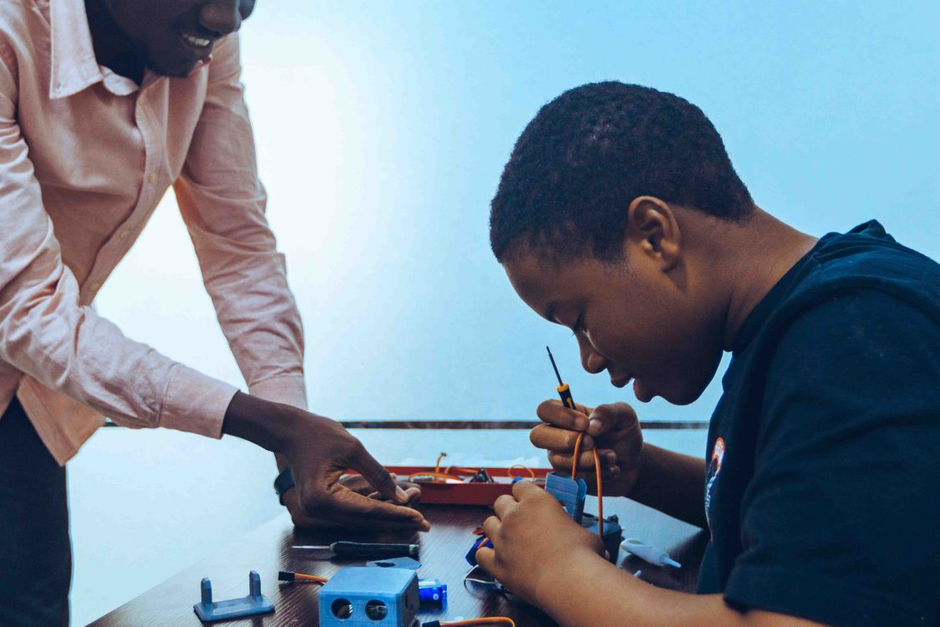
What age is actually right?
Six works. Nine works. Twelve works. Fifteen works — more than most people admit. A fifteen-year-old brings cognitive horsepower a six-year-old doesn't have. They program something meaningful in their first term that no six-year-old can replicate.
The honest answer: whenever your child is ready to be interested. Not when the brochure says. Not when the neighbour enrolled. When the child is ready to be curious.
And if you don't know whether they're ready? That's exactly what a free demo is for.
The only question worth asking
Stop comparing start dates. Ask a different question: does my child come home wanting to do it again?
That's the only metric that matters at six. It's the only metric that matters at twelve. The child who keeps going is not the one who started first. It's the one who found something worth continuing.
Book your free demo. Bring the kid. Watch what happens in ninety minutes. That will tell you more than any article — including this one — ever could.
Frequently asked questions
What is the best age to start robotics classes?
There's no single best age. Children as young as 6 can start with block-based programming and simple circuits. By 10–12, they can handle more complex builds. What matters more than age is curiosity — if the child wants to build things, they're ready.
Is my 10-year-old too old to start robotics?
Not at all. A 10-year-old actually has an advantage — they can follow multi-step instructions, debug problems, and understand why something failed. Many of our strongest students started between 10 and 13.
What if my child loses interest after a few classes?
That's what a free demo is for. We show your child a real session before you commit to a term. If there's no spark in 90 minutes, we'll tell you honestly.
Do girls do as well as boys in robotics?
Yes. We see no difference in outcomes. The gap in STEM is not ability — it's early exposure. Girls who start robotics young perform at exactly the same level as their peers.