
5 Things to Check Before You Pay for a Robotics Class
RoboAiQ Editorial · Editorial Team · Published 3 June 2026
Written by RoboAiQ's editorial bench — working electronics engineers and the instructors who teach the classes.
A parent came to me last month after pulling her son out of a robotics program. Three months in. No hardware. No working project. Just videos, worksheets, and a certificate the program called a "milestone."
She wasn't angry. She was embarrassed. "I should have checked," she said. She should have. But she didn't know what to check. Most parents don't.
1. Is there a free demo — and is it a real one?
Any program confident in what it delivers will show you before you pay. Not a sales call. Not a curriculum PDF. A real session where your child builds something.
If the program won't let you observe a class or offer a genuine trial, that tells you everything. Confidence shows itself. So does the absence of it.
2. Does the child touch hardware in the first session?
If the first class is a lecture, a video, or a worksheet about what robotics is — leave.
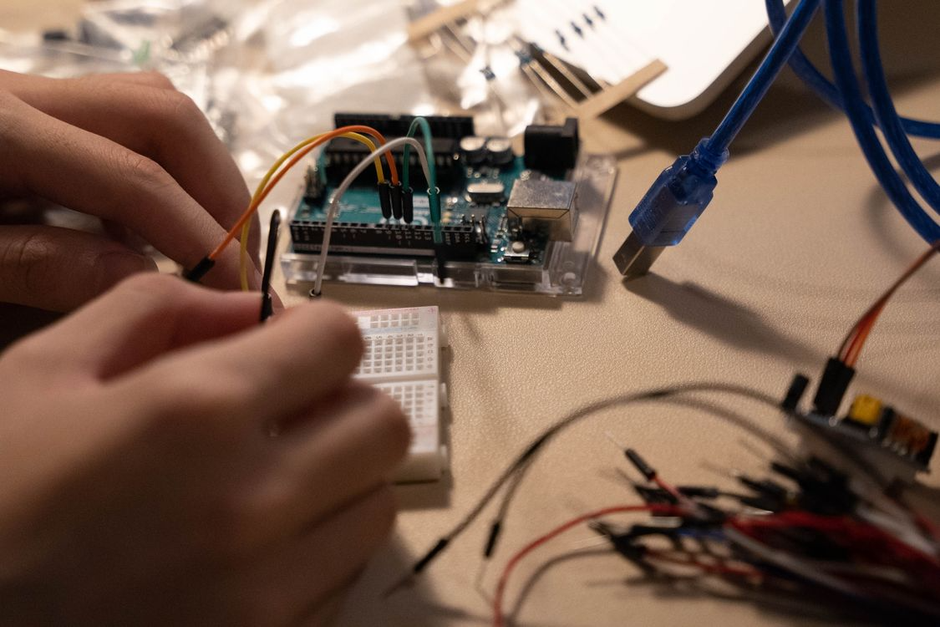
A child's interest is a fragile thing. The moment that interest meets something physical — something that can be wired, broken, and fixed — it has a better chance of surviving to week three. A good program puts components in a child's hands within the first thirty minutes. Not because spectacle matters. Because interest doesn't wait.
3. Watch the mentor, not the slide deck
This is the one most parents miss entirely. They read the curriculum. They check the certification. They look at the fee structure.
They forget to watch the person in the room.
A bored teacher with a brilliant curriculum produces bored children. A curious mentor with a workable curriculum produces curious children. On your free demo, put the slide deck aside. Watch where the mentor's eyes go when a child asks an unexpected question. Watch whether they move toward the child or hold their ground. That tells you more than any testimonial.
4. Is there real progression — or just a recurring Level 1?
Some programs run the same content loop on repeat. Different children, same circuit, same project. The instructor becomes very good at that project. The child learns it once and then waits.
Ask a direct question: "What will my child be building in month three versus month twelve?" If the answer is vague or circular, the program has no progression. A program without progression is expensive screen time with better branding.
5. Does it tell you when NOT to enrol?
I know this sounds like the wrong thing to look for in a program that wants your business. But a program that sells to everyone is accountable to no one.
There are families I tell to wait. A child in the middle of board exam prep doesn't need one more commitment right now. A child who has shown zero curiosity about building or tinkering might need a demo before committing to a term. We say this. Programs that won't — that take any enrolment on any day for any child — are optimising for revenue, not outcomes.
The honest program tells you when it isn't the right fit. And that honesty, more than any curriculum document, is what's actually worth paying for.
The only contract that matters
Before you read another review or compare another fee, book a free demo. Ninety minutes. Your child, our mentor, real hardware.
After that, you'll know. Not because I told you — because you watched.
Frequently asked questions
How do I evaluate a robotics class before enrolling my child?
Ask for a free demo where your child actually builds something. Watch the mentor — not the slide deck. Ask what your child will be building in month six versus month one. If the answers are vague, the program has no real progression.
What questions should I ask a robotics program before paying?
Three questions matter most: Does the first class involve hardware? What does the progression look like over 6–12 months? And — critically — are there situations where you'd tell a family not to enrol?
Is a free demo enough to judge a robotics program?
One session won't tell you everything. But it will tell you whether the mentor is engaged, whether your child responds to the material, and whether the program delivers on what it promises in its brochure. That's enough to make a confident decision.
How long before my child builds something real?
In our program, children build a working robot in the first session. Not a finished product — but something that moves and responds to instructions. If a program can't do that in 90 minutes, ask why.